COSPLAY
-
11 Kimono in the West
< > The international exhibition 1867 in Paris was the first time Japan presented itself as a nation to the world. From then on, the Japanese government sent women in kimonos to the Japanese pavilions to act as hosts. Their exotic clothing inspired Western artists to write books, create paintings and theatre productions. Images of Japanese woman…
-
10 Wafuku
< > The transition to Western-style clothing throughout wider Japanese society happened gradually, with a significant degree of resistance. Until the Rokumeikan period (1883–1890), Western culture grew in popularity, and a number of clothing reforms came to order. After the Russo-Japanese War 日露戦争 and the occupation of Korea, national pride encouraged a return to nativism in which the kimono was…
-
09 Yofuko Western Cloth
< > Clothing was originally referred to as hifuku (被 服) or ifuku (衣 服). The term fukusō (服装) first appeared in a military ordinance in 1874 when the cultural distinction between the Western yo and the Japanese wa was created. Things Western, including clothing, referred to as “yō no fuku” (Western clothes), were seen as symbols of “civilized and enlightened” cultures, and therefore symbols of…
-
08 Textile Industry
< > When around 1864 a disease devastated the silk-producing industries of France and Italy it put pressure on Japanese and Chinese silk producers to fill the increased demand from Europe. Supported by both the government and private sector, Japanese silk exports skyrocketed, and Japan became the world’s leading exporter of silk by 1912. Technology transfer…
-
07 Tailoring
< > In the early Meiji period, Western clothing was expensive, and was worn only by the richest in society. Wool had to be imported, and the need to dress properly for different occasions challenged the Japanese elite. When in 1866, wool uniforms were adopted for the entire army and the production of these uniforms was…
-
06 Clothing Reform
< > Under the strong influence of foreign cultures the government encouraged people to adopt western dress, customs and even changing the diet to include meat. By 1872 government officials and military personnel were required by law to wear Western clothing for official functions. Ordinary citizens, were required to wear a mantsuki kimono with the family crest kamon, on…
-
05 Inventing the Kimono
< > During the Edo era, the kosode was a unisex clothing, worn by every Japanese, regardless of age or socio-economic position. The quality of the fabric, the choice of pattern, yarn, dye, print and colour were essential criteria for the presentation of the rank, age, gender and sophistication of the person wearing it. Women of the lower classes wore…
-
04 The body in public view
< > Until the end of the Edo period the Japanese body symbolized one persons place in society. Aside from the dress one wore, bodies were marked and styled in a way to distinguish oneself from other groups. The male court nobles deemed themselves best attired when they resembled women most closely. Robes and trousers were…
-
03 Working Cloth
< > As the most valuable of all materials, silk, was used by the aristocrats and by the military class, while the commoners had their cloth made of bast fibres such as asa (hemp), fuji (wisteria bark), kuzu (arrowroot), koozo (mulberry), or shina (Japanese lime). Gradually cotton production increased with the introduction of more efficient home-based spinning wheels and weaving looms. Hemp garments began to…
-
02 Japanese Kimono for Export
< > Trade in kimono and washi paper to Europe began in 1641, when the Netherlands became the only European country permitted by the shogunate. The clothes for export resembled Japanese yogi 夜着, with no shoulder seams. The sleeves were attached in a more typical way of Western dress. For example, in 1692, 123 such garments were sold by the…
-
01 Traditional Clothes
< > Nara period (710–794) Clothing in the Nara-period was influenced by Tang-dynasty China. Women adopted overlapping tarikubi (垂領, “drape-necked”) robes with very long sleeves, and a wrapped skirt (mo 裳) that was draped over the waist. Men continued wearing round agekubi (上領, “high-necked”) mandarin robes, which were associated with scholasticism. Heian Period (794 – 1185) …
-
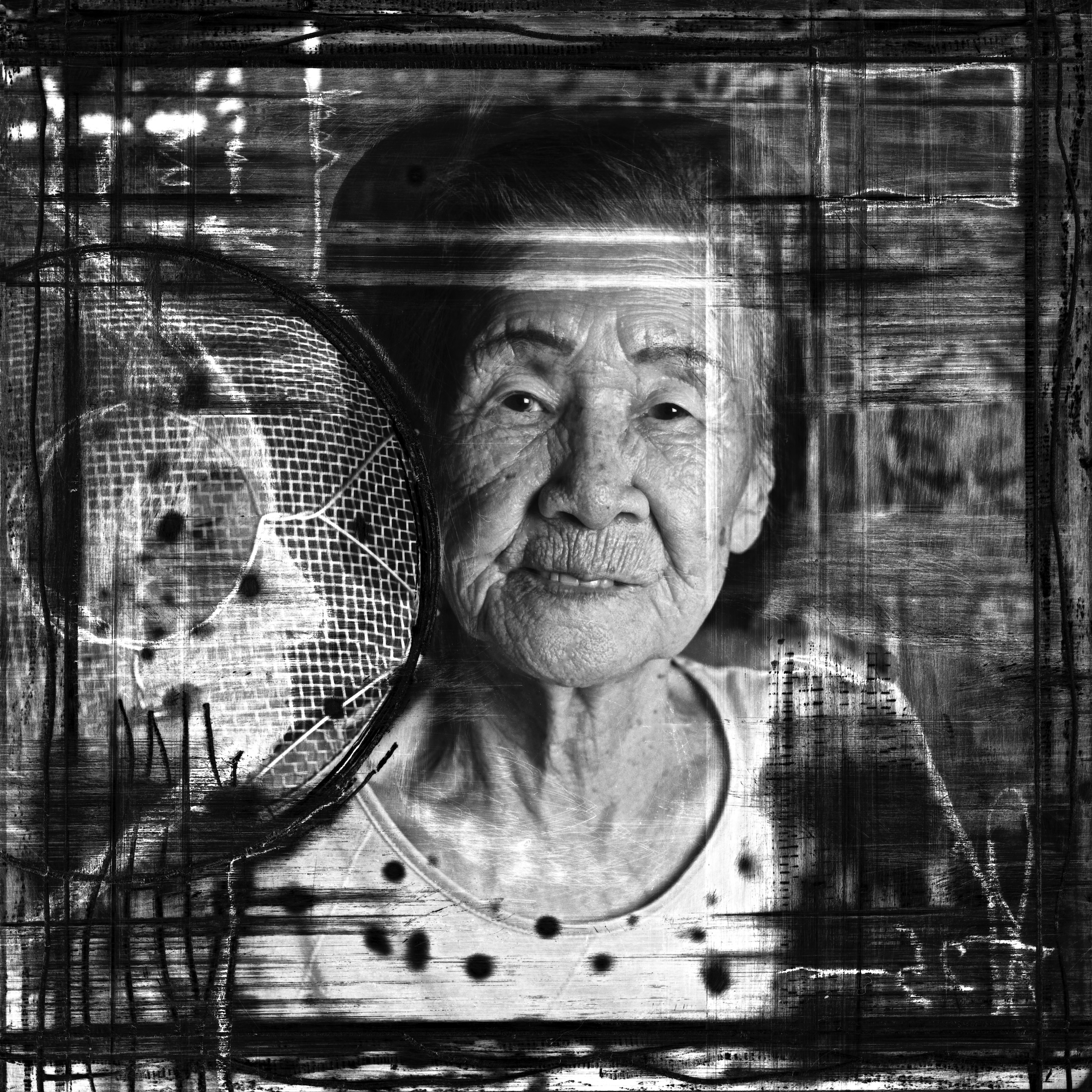
One-eyed Reminiscence | Gunma JP
The work, which is purely analogue with no digital manipulation, is at the intersection of photography and painting. Being not simply portraits, the works draw on the cultural history of artistic gestures. In a cross-over process she alters the chemical layers of the negative slides, by scratching, bleaching and drawing mirror-inverted onto the crystalline structure.…